
Circle of Francesco Albani, Italienische Mythologie, 1660, Öl an Bord
€105.69
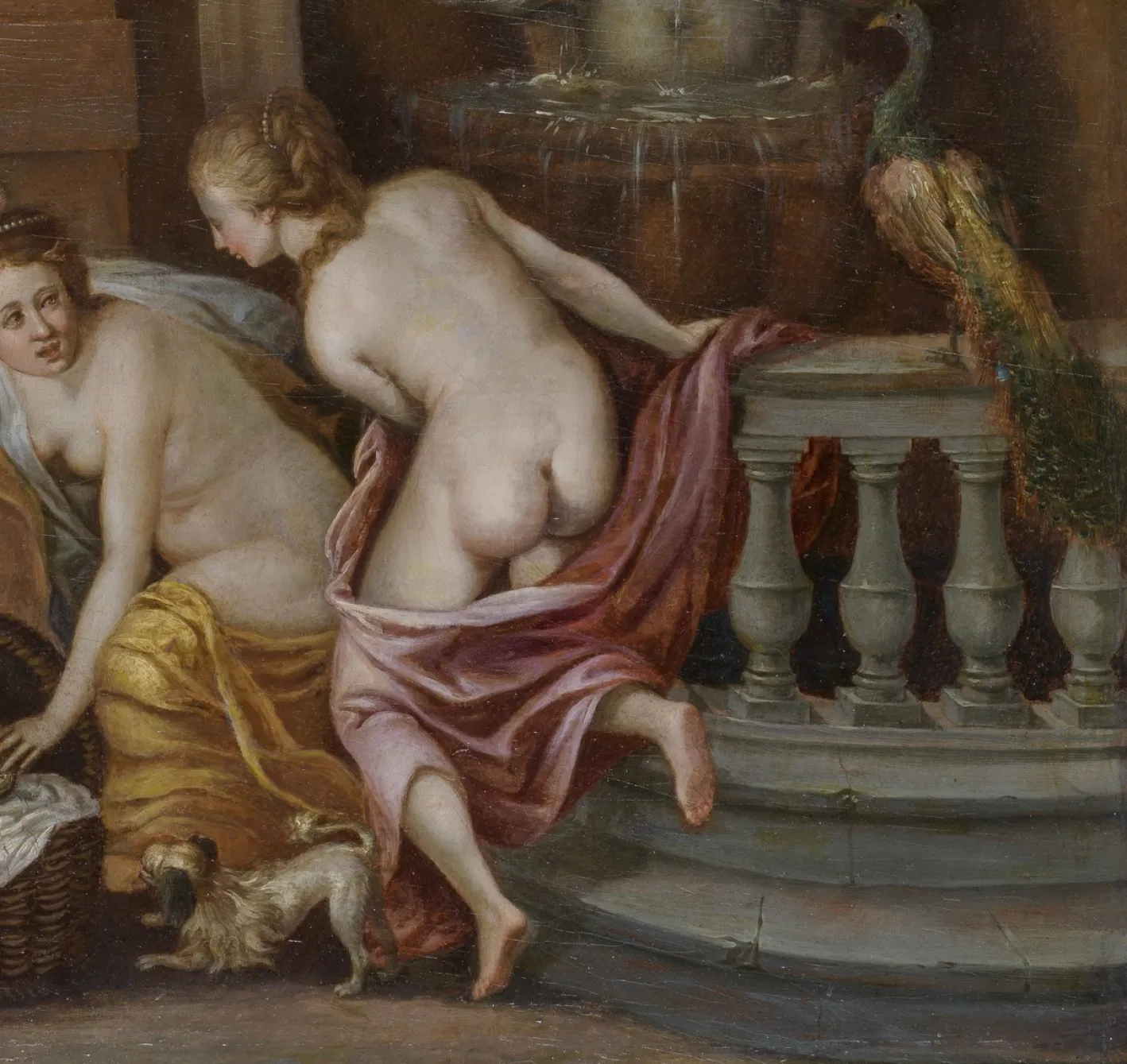
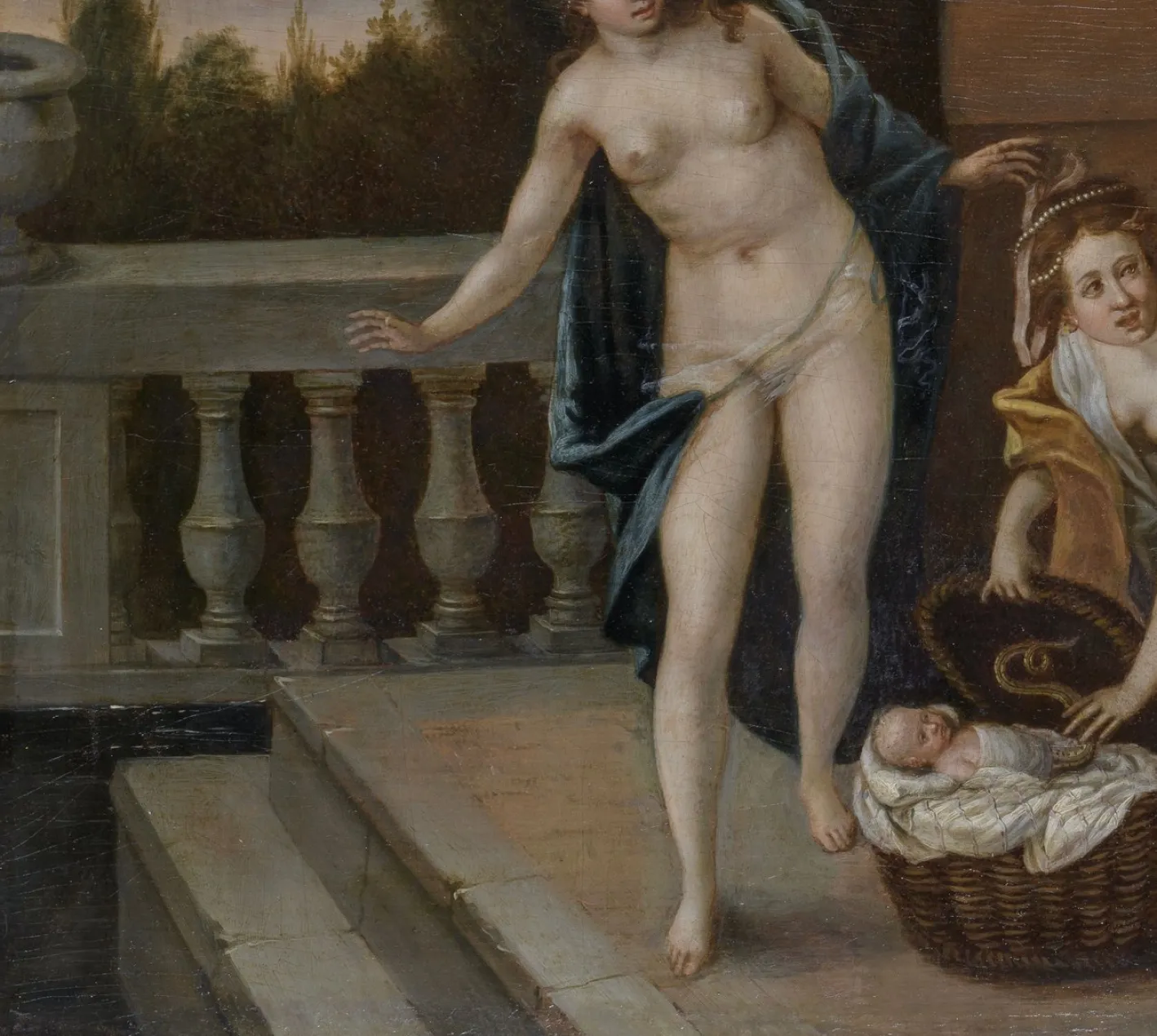
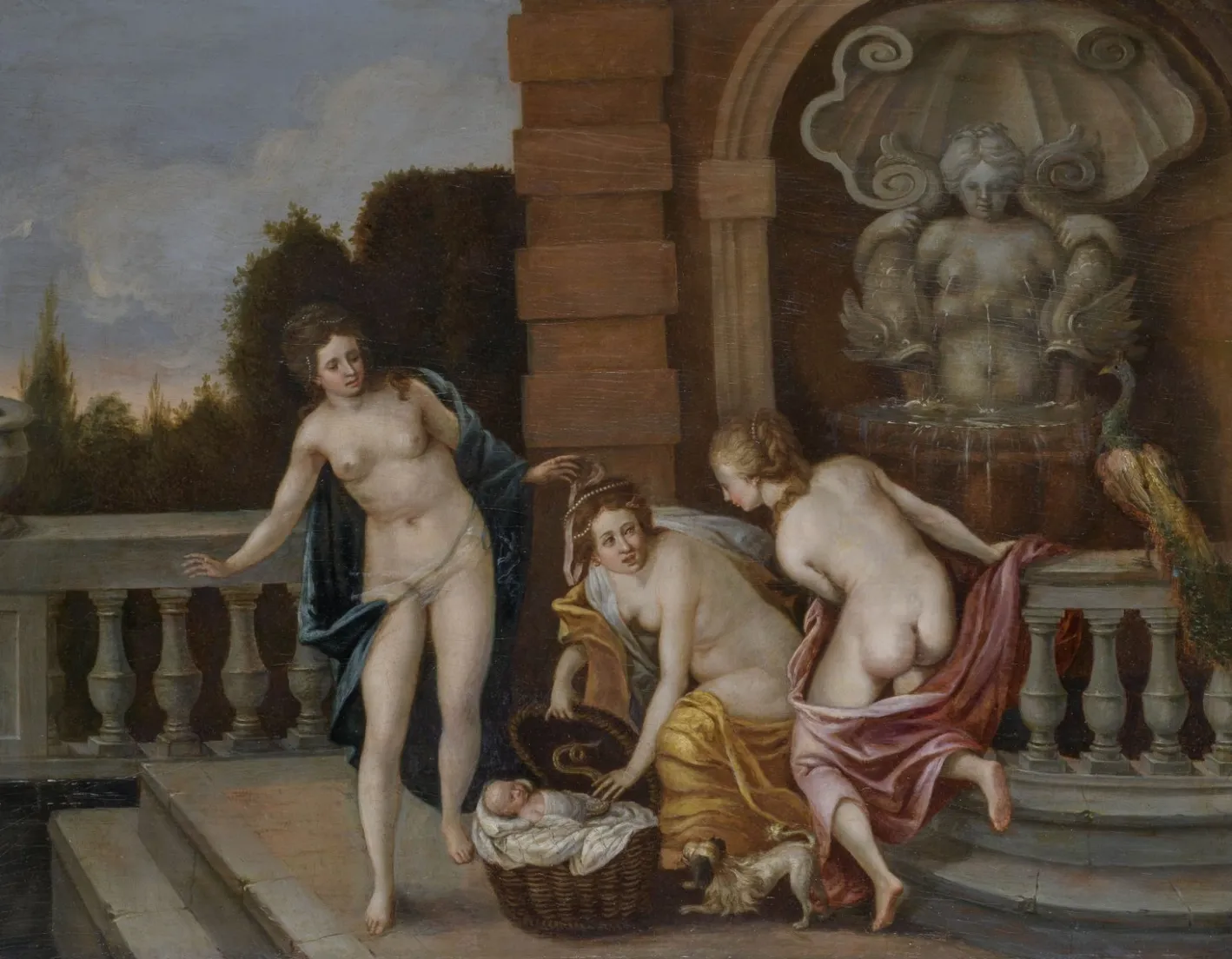
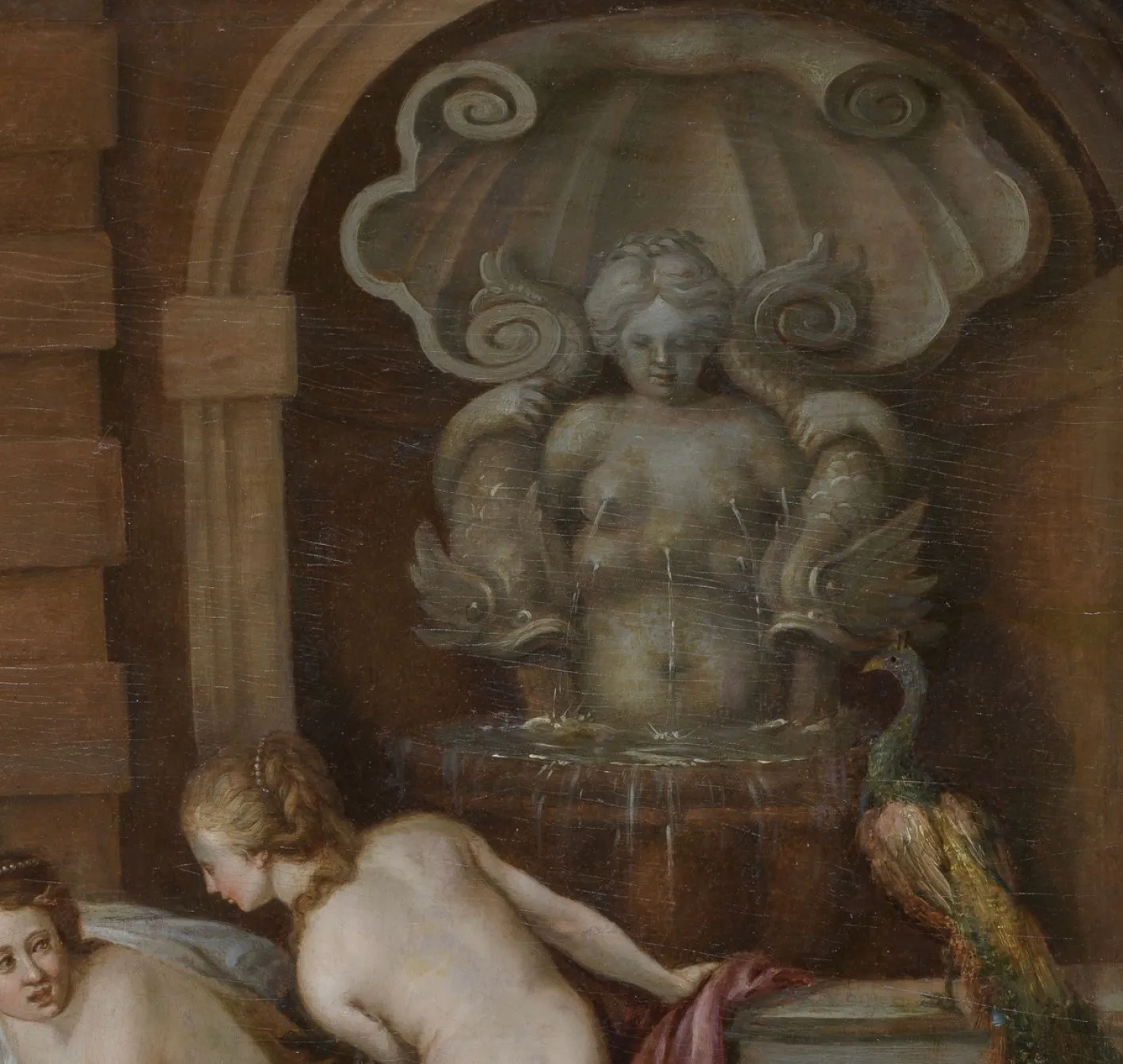
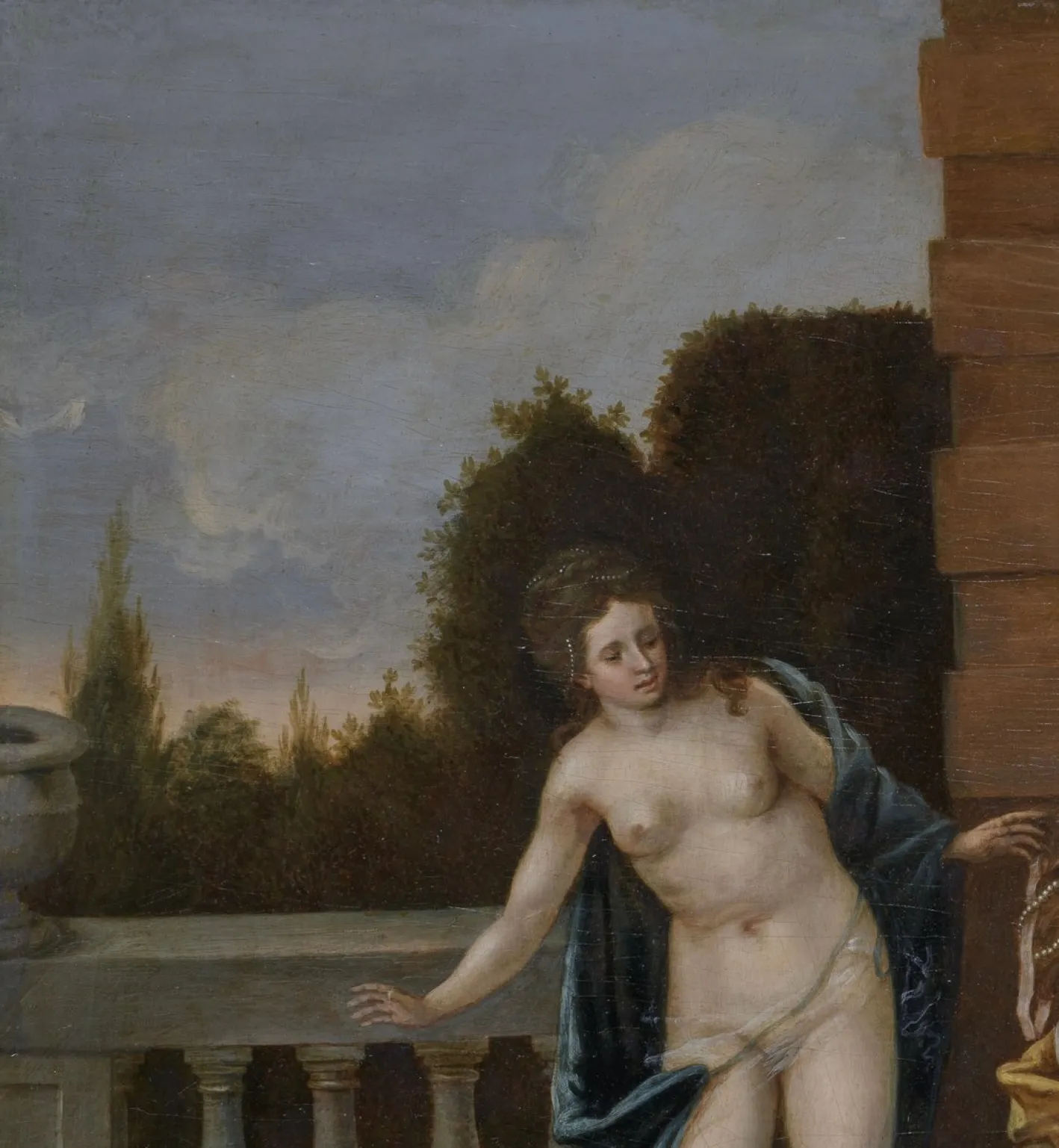
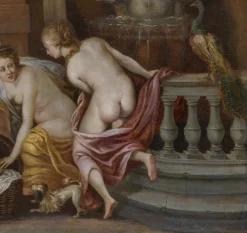
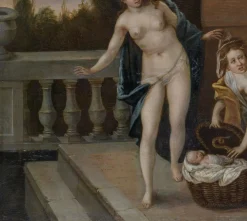
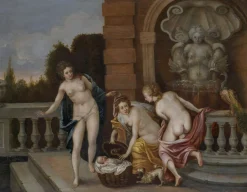
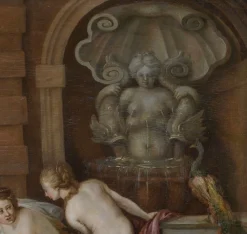
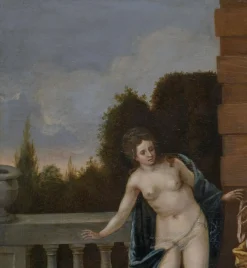
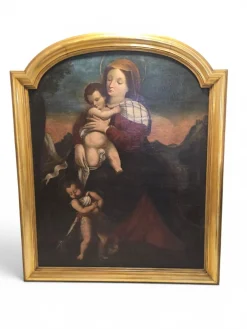
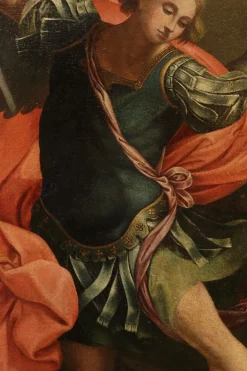
This important oil painting on wood depicts a subject that is very rare in the iconography of ancient mythological paintings: the birth of Erittonio.
The extremely high quality of this extremely rare painting suggests that it was painted by an artist who frequented Francesco Albani’s studio.
The period, the mythological subject, the harmony of the colours and, above all, the sublime quality of the flesh tones all point in this direction.
This artwork, never before on the market, comes from an important Italian private collection
ERYTHTONIOS (᾿Ερυχϑόνιος, Erychthonios)
Born of Hephaestus‘ love for Athena, from the breast of Ghe, who was impregnated by the god; welcomed by Athena, who placed him in a basket together with one or two snakes, entrusting him to the care of Cecrops‘ three daughters.
Against the goddess’s wishes, they opened the chest, from which emerged, according to different versions of the myth, either the child wrapped in snakes or a snake, which, in some versions, killed the girls, while in others, they threw themselves from the Acropolis in fear. Erittonio, in the form of a snake, is welcomed by Athena into her temple and curls up under the goddess’s shield. Alongside this myth, of Ionian origin, are others due to the doubling of the figures of E. and Erechtheus
The scene of the birth appears in figurative tradition: in a Melian terracotta relief from the early 5th century, Ghe, half-emerging, holds out the baby Erittonio. to Athena, who welcomes him in the presence of Cecrops; the same scene appears on various painted vases, such as a red-figure kölix by the Painter of Kodros, from Tarquinia, in the Berlin Museums, dating from around 440 BC, where Hephaestus also appears alongside Cecrops.
A modest red-figure vase from Camiro, in the British Museum, depicts the moment when the fleeing Cecropids discover the cista, from which the infant Erittonio. emerges between two snakes, greeting Athena.
The moment when the chest was opened was depicted by Phidias on the xiii and xiv S metopes of the Parthenon, where Cecrops and Pandrosus appear in the first and Erisichthon and Aglaurus with the chest uncovered in the second.
A kölix in the style of the Brygos Painter in Frankfurt, on the other hand, depicts the large snake E. chasing the fleeing Cecropids towards their father’s palace.
Luciano (De dom., 27) recalls a painting depicting the scene of the birth and the representation of the myth in pantomime on the theatre (De salt., 39).
Bibliography: Engelmann, in Roscher, cc. 1303-1308, s. v. Erichthonios; P. Jacobstahl, Die Melischen Reliefs, Berlin 1931, pp. 96-98, plate 75 a; W. Züchner, in Jahrbuch, LXV-LXVI, 1950-51, p. 200 ff., figs. 34-35; J. D. Beazley, Red-fig., p. 720; G. Becatti, Problemi fidiaci, Florence 1951, p. 22.
Francesco Albani (Bologna, August 17, 1578 – Bologna, October 4, 1660) was an Italian painter.
Albani was born in Bologna, Papal States, in 1578.
His father was a silk merchant who intended his son to go into his own trade. By the age of twelve, however, he had become an apprentice to the competent mannerist painter Denis Calvaert, in whose studio he met Guido Reni. He soon followed Reni to the so-called „Academy“ run by Annibale, Agostino, and Ludovico Carracci.
This studio fostered the careers of many painters of the Bolognese school, including Domenichino, Massari, Viola, Lanfranco, Giovanni Francesco Grimaldi, Pietro Faccini, Remigio Cantagallina, and Guido Reni.
In 1600, Albani moved to Rome to work on the fresco decoration of the gallery of the Palazzo Farnese, which was being completed by the studio of Annibale Carracci.
At this time, Rome, under Clement VIII Aldobrandini (1592–1605) was exhibiting some degree of administrative stability and renewed artistic patronage.
While Pope Clement had been born into a Florentine family resident in Urbino, his family was allied by marriage to the Emilia-Romagna and the Farnese, since Ranuccio I Farnese, Duke of Parma had married Margherita Aldobrandini. Parma, like Bologna, being part of the Region of Emilia-Romagna, it was not surprising that Cardinal Odoardo Farnese, Ranuccio’s brother, chose to patronise the Carraccis from Bologna, thereby establishing Bolognese dominance of Roman fresco painting for nearly two decades.
Albani became one of Annibale’s most prominent apprentices. Using Annibale’s designs and assisted by Lanfranco and Sisto Badalocchio, Albani completed frescoes for the San Diego Chapel in San Giacomo degli Spagnoli between 1602 and 1607.
In 1606–7, Albani completed the frescoes in the Palazzo Mattei di Giove in Rome. He later completed two other frescoes in the same palace, also on the theme of Life of Joseph.
In 1609, he completed the ceiling of a large hall with Fall of Phaeton and Council of the Gods for the Palazzo Giustiniani (now Palazzo Odescalchi) at Bassano (di Sutri) Romano.
This work was commissioned by Vincenzo Giustiniani, also famous as a patron of Caravaggio.
During 1612–14, Albani completed the Choir frescoes at the church of Santa Maria della Pace which had just been remodelled by Pietro da Cortona.
In 1616 he painted ceiling frescoes of Apollo and the Seasons at Palazzo Verospi in Via del Corso for the cardinal Fabrizio Verospi.
In his later years, Albani developed a mutual, though respectful, rivalry with the more successful Guido Reni, who was also heavily patronized by the Aldobrandini, and under whom Albani had worked at the chapel of the Palazzo del Quirinale.
Albani’s best frescoes are those on mythological subjects.
Among the best of his sacred subjects are a St Sebastian and an Assumption of the Virgin, both in the church of San Sebastiano fuori le Mura in Rome.
He was among the Italian painters to devote himself to painting cabinet pictures.
His mythological subjects include The Sleeping Venus, Diana in the Bath, Danaë Reclining, Galatea on the Sea, and Europa on the Bull.
A rare etching, the Death of Dido, is attributed to him. Carlo Cignani, Andrea Sacchi, Francesco Mola, and Giovanni Francesco Grimaldi were among his students.
Following the death of his wife he returned to Bologna, where he married a second time and lived until his death.
Albani never acquired the monumentality or tenebrism that was quaking the contemporary world of painters, and is often derided for his lyric, cherubim-filled sweetness, which often has not yet shaken the mannerist elegance.
While Albani’s thematic would have appealed to Poussin, he lacked the Frenchman’s muscular drama.
His style sometimes seems to have more in common with the decorative Rococo than with the painting of his own time.
Among his pupils were his brother Giovanni Battista Albani, and others including Giacinto Bellini, Girolamo Bonini, Giacinto Campagna, Antonio Catalani, Carlo Cignani, Giovanni Maria Galli, Filippo Menzani, Bartolommeo Morelli, Andrea Sacchi, Andrea Sghizzi, Giovanni Battista Speranza, Antonio Maria del Sole, Emilio Taruffi, and Francesco Vaccaro.
Dieses bedeutende Ölgemälde auf Holz stellt ein Thema dar, das in der Ikonographie der antiken mythologischen Malerei sehr selten ist: die Geburt des Erittonio.
Die extrem hohe Qualität dieses äußerst seltenen Gemäldes lässt vermuten, dass es von einem Künstler gemalt wurde, der häufig im Atelier von Francesco Albani zu Gast war.
Der Zeitraum, das mythologische Thema, die Harmonie der Farben und vor allem die erhabene Qualität der Hauttöne deuten darauf hin.
Dieses Kunstwerk, das noch nie auf dem Markt war, stammt aus einer bedeutenden italienischen Privatsammlung
ERYTHTONIOS (᾿Ερυχϑόνιος, Erychthonios)
Geboren aus der Liebe des Hephaistos zu Athene, aus der Brust von Ghe, die von dem Gott geschwängert wurde. Athene nahm ihn auf, legte ihn zusammen mit einer oder zwei Schlangen in einen Korb und vertraute ihn der Obhut der drei Töchter des Cecrops an.
Gegen den Willen der Göttin öffneten sie die Truhe, aus der je nach Version des Mythos entweder das in Schlangen eingewickelte Kind oder eine Schlange hervorkam, die in einigen Versionen die Mädchen tötete, während sie sich in anderen aus Angst von der Akropolis stürzten. Erittonio wird in Form einer Schlange von Athene in ihrem Tempel empfangen und rollt sich unter dem Schild der Göttin zusammen. Neben diesem Mythos, der ionischen Ursprungs ist, gibt es weitere, die auf die Verdoppelung der Figuren von E. und Erechtheus zurückzuführen sind
Die Szene der Geburt taucht in der bildlichen Überlieferung auf: Auf einem Terrakottarelief aus Melian aus dem frühen 5. Jahrhundert hält Ghe, halb aufgetaucht, den kleinen Erittonio. der Athene entgegen, die ihn in Anwesenheit von Cecrops willkommen heißt; dieselbe Szene erscheint auf verschiedenen bemalten Vasen, wie einem rotfigurigen kölix des Malers von Kodros aus Tarquinia in den Berliner Museen aus der Zeit um 440 v. Chr., auf dem neben Cecrops auch Hephaistos erscheint.
Eine bescheidene rotfigurige Vase aus Camiro, die sich im Britischen Museum befindet, zeigt den Moment, in dem die fliehenden Cecropiden die Cista entdecken, aus der das Kind Erittonio. zwischen zwei Schlangen hervorkommt und Athene begrüßt.
Der Moment, in dem die Truhe geöffnet wurde, wurde von Phidias auf den Metopen xiii und xiv S des Parthenon dargestellt, wobei in der ersten Metope Cecrops und Pandrosus und in der zweiten Metope Erisichthon und Aglaurus mit der enthüllten Truhe erscheinen.
Ein kölix im Stil des Brygos-Malers in Frankfurt zeigt dagegen die große Schlange E., die die fliehenden Cecropiden zum Palast ihres Vaters jagt.
Luciano (De dom., 27) erinnert an ein Gemälde, das die Geburtsszene darstellt, und an die Darstellung des Mythos in der Pantomime auf dem Theater (De salt., 39).
Bibliographie: Engelmann, in: Roscher, cc. 1303-1308, s. v. Erichthonios; P. Jacobstahl, Die Melischen Reliefs, Berlin 1931, S. 96-98, Taf. 75 a; W. Züchner, in Jahrbuch, LXV-LXVI, 1950-51, S. 200 ff., figs. 34-35; J. D. Beazley, Red-fig., S. 720; G. Becatti, Problemi fidiaci, Florenz 1951, S. 22.
Francesco Albani (Bologna, 17. August 1578 – Bologna, 4. Oktober 1660) war ein italienischer Maler.
Albani wurde 1578 in Bologna, im Kirchenstaat, geboren.
Sein Vater war Seidenhändler und wollte, dass sein Sohn seinen eigenen Beruf ergreift. Im Alter von zwölf Jahren wurde er jedoch Lehrling bei dem kompetenten manieristischen Maler Denis Calvaert, in dessen Atelier er Guido Reni kennenlernte. Bald folgte er Reni in die so genannte „Akademie“, die von Annibale, Agostino und Ludovico Carracci geleitet wurde.
Dieses Atelier förderte die Karrieren vieler Maler der Bologneser Schule, darunter Domenichino, Massari, Viola, Lanfranco, Giovanni Francesco Grimaldi, Pietro Faccini, Remigio Cantagallina und Guido Reni.
Im Jahr 1600 zog Albani nach Rom, um an der Freskendekoration der Galerie des Palazzo Farnese zu arbeiten, die von der Werkstatt von Annibale Carracci fertiggestellt wurde.
Zu dieser Zeit herrschte in Rom unter Clemens VIII. Aldobrandini (1592-1605) eine gewisse administrative Stabilität und ein neues Mäzenatentum.
Während Papst Clemens in eine florentinische Familie mit Wohnsitz in Urbino hineingeboren worden war, war seine Familie durch Heirat mit der Emilia-Romagna und den Farnesen verbunden, da Ranuccio I. Farnese, Herzog von Parma, Margherita Aldobrandini geheiratet hatte. Da Parma wie Bologna zur Region Emilia-Romagna gehörte, war es nicht verwunderlich, dass Kardinal Odoardo Farnese, der Bruder von Ranuccio, die Carraccis aus Bologna förderte und damit die Vorherrschaft der Bologneser in der römischen Freskenmalerei für fast zwei Jahrzehnte festigte.
Albani wurde einer der prominentesten Lehrlinge von Annibale. Unter Verwendung von Annibales Entwürfen und mit Unterstützung von Lanfranco und Sisto Badalocchio vollendete Albani zwischen 1602 und 1607 die Fresken für die Kapelle San Diego in San Giacomo degli Spagnoli.
In den Jahren 1606-7 vollendet Albani die Fresken im Palazzo Mattei di Giove in Rom. Später vollendete er zwei weitere Fresken im selben Palast, ebenfalls zum Thema Leben des Joseph.
Im Jahr 1609 vollendete er die Decke eines großen Saals mit dem Sturz des Phaeton und dem Rat der Götter für den Palazzo Giustiniani (heute Palazzo Odescalchi) in Bassano (di Sutri) Romano.
Dieses Werk wurde von Vincenzo Giustiniani in Auftrag gegeben, der auch als Mäzen von Caravaggio bekannt war.
In den Jahren 1612-14 vollendete Albani die Chorfresken in der Kirche Santa Maria della Pace, die gerade von Pietro da Cortona umgestaltet worden war.
Im Jahr 1616 malte er im Palazzo Verospi in der Via del Corso für den Kardinal Fabrizio Verospi die Deckenfresken von Apollo und den Jahreszeiten.
In seinen späteren Jahren entwickelte Albani eine gegenseitige, wenn auch respektvolle Rivalität mit dem erfolgreicheren Guido Reni, der ebenfalls von den Aldobrandini stark gefördert wurde und unter dem Albani in der Kapelle des Palazzo del Quirinale gearbeitet hatte.
Albanis beste Fresken sind die zu mythologischen Themen.
Zu den besten seiner sakralen Themen gehören ein Heiliger Sebastian und eine Himmelfahrt der Jungfrau Maria, beide in der Kirche San Sebastiano fuori le Mura in Rom.
Er gehörte zu den italienischen Malern, die sich der Kabinettmalerei widmeten.
Zu seinen mythologischen Sujets gehören Die schlafende Venus, Diana im Bad, Danaë liegend, Galatea auf dem Meer und Europa auf dem Stier.
Eine seltene Radierung, der Tod der Dido, wird ihm zugeschrieben. Carlo Cignani, Andrea Sacchi, Francesco Mola und Giovanni Francesco Grimaldi gehörten zu seinen Schülern.
Nach dem Tod seiner Frau kehrte er nach Bologna zurück, wo er ein zweites Mal heiratete und bis zu seinem Tod lebte.
Albani erlangte nie die Monumentalität oder den Tenebrismus, die die zeitgenössische Malerwelt erschütterten, und wird oft für seine lyrische, von Cherubim erfüllte Zartheit verspottet, die oft noch nicht die manieristische Eleganz erschüttert hat.
Albanis Thematik hätte Poussin gefallen, aber ihm fehlte die muskulöse Dramatik des Franzosen.
Sein Stil scheint manchmal mehr mit dem dekorativen Rokoko als mit der Malerei seiner eigenen Zeit gemein zu haben.
Zu seinen Schülern gehörten sein Bruder Giovanni Battista Albani und andere wie Giacinto Bellini, Girolamo Bonini, Giacinto Campagna, Antonio Catalani, Carlo Cignani, Giovanni Maria Galli, Filippo Menzani, Bartolommeo Morelli, Andrea Sacchi, Andrea Sghizzi, Giovanni Battista Speranza, Antonio Maria del Sole, Emilio Taruffi und Francesco Vaccaro.
Klicken Sie hier für die vollständige BeschreibungSchließen
| Epoche | Vor 1890 |
|---|---|
| Jahr | 1660 |
| Produktionszeitraum | Vor 1890 |
| Hergestellt in | Italien |
| Kennzeichnung vorhanden | Dieses Objekt wird dem oben genannten Designer/Hersteller zugeschrieben. Es hat keine Kennzeichnung |
| Stil | Klassisch, Figurative, Italian, Alte Meister, Neoklassisch |
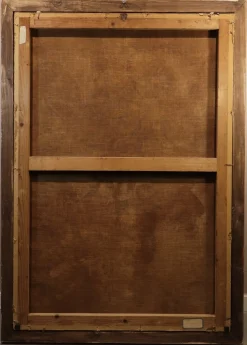
| Zustand | Gut — Dieser Vintage/antike Artikel kann einige Gebrauchsspuren wie Kratzer und andere Zeichen der Zeit aufweisen. |
| Details über Schäden und Restaurierungen |
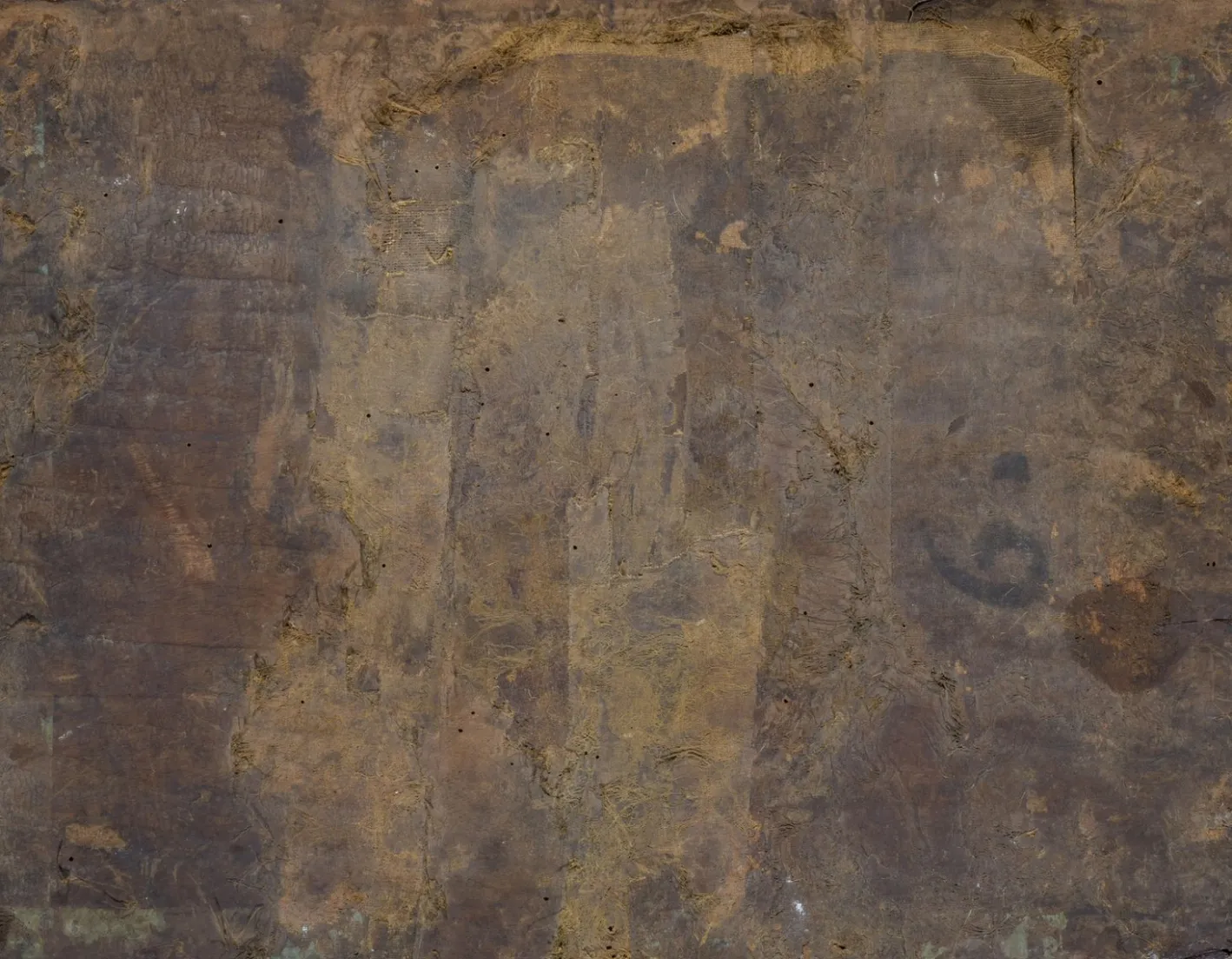
Leichte altersbedingte Gebrauchsspuren
|
| Artikelnummer | MAX-2308061 |
| Material | Öl auf Karton |
| Farbe | Mehrfarbig |
| Breite | 63 cm 63 cm |
| Tiefe | 2 cm 2 cm |
| Höhe | 49 cm 49 cm |
Be the first to review “Circle of Francesco Albani, Italienische Mythologie, 1660, Öl an Bord”
Related products
Arbeiten Auf Papier
Unknown – Lamp – Original China Ink and Watercolor – Late 19. Jh

Abstraction

Color Pop
Impressionismus
Druckgraphiken Und Multiples
Arbeiten Auf Papier

Gemälde
Reviews
There are no reviews yet.