
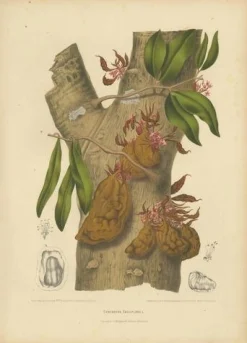
Berthe Hoola van Nooten, Namnam Tree, 1880, Chromolithograph
€110.85
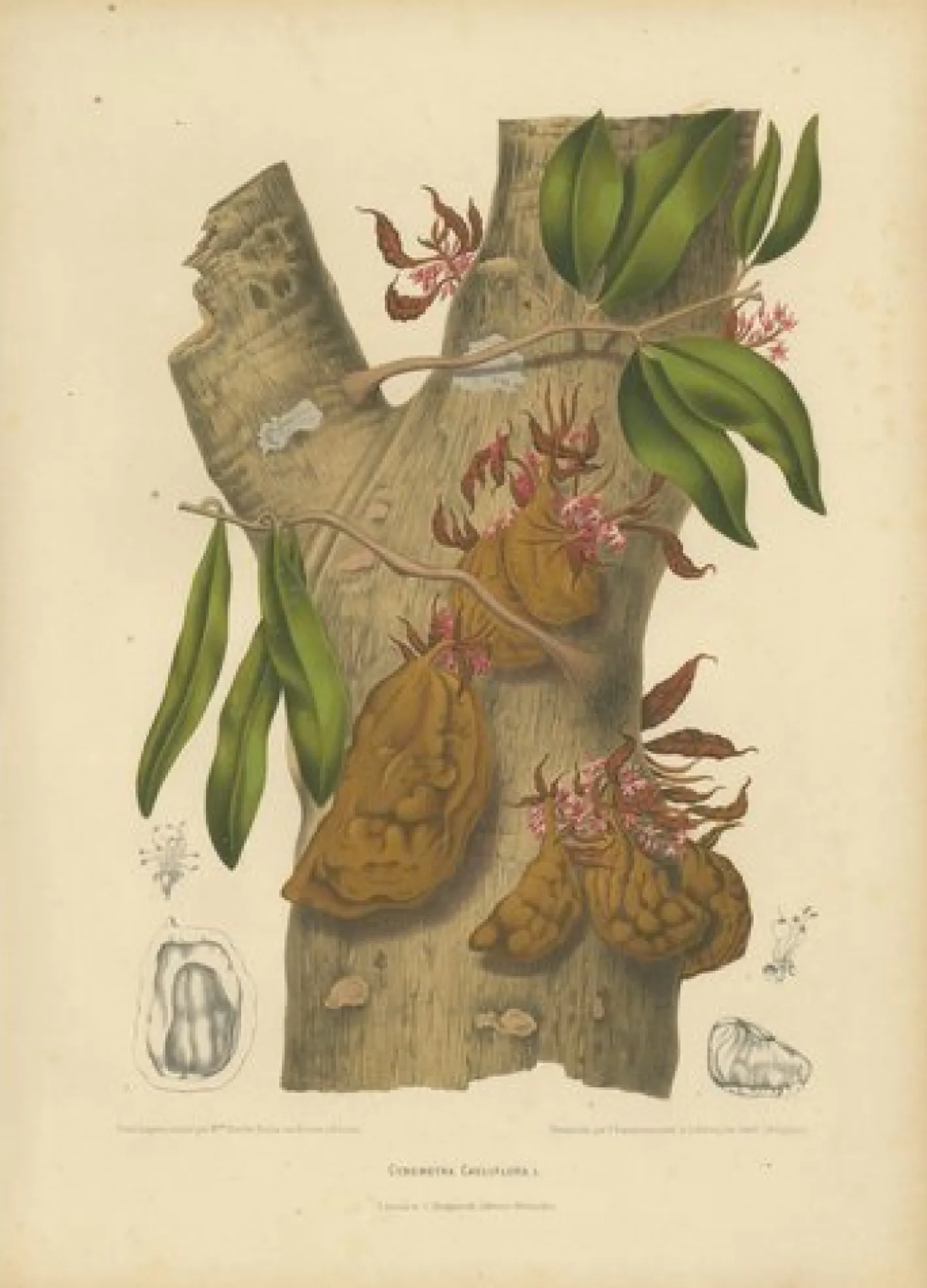
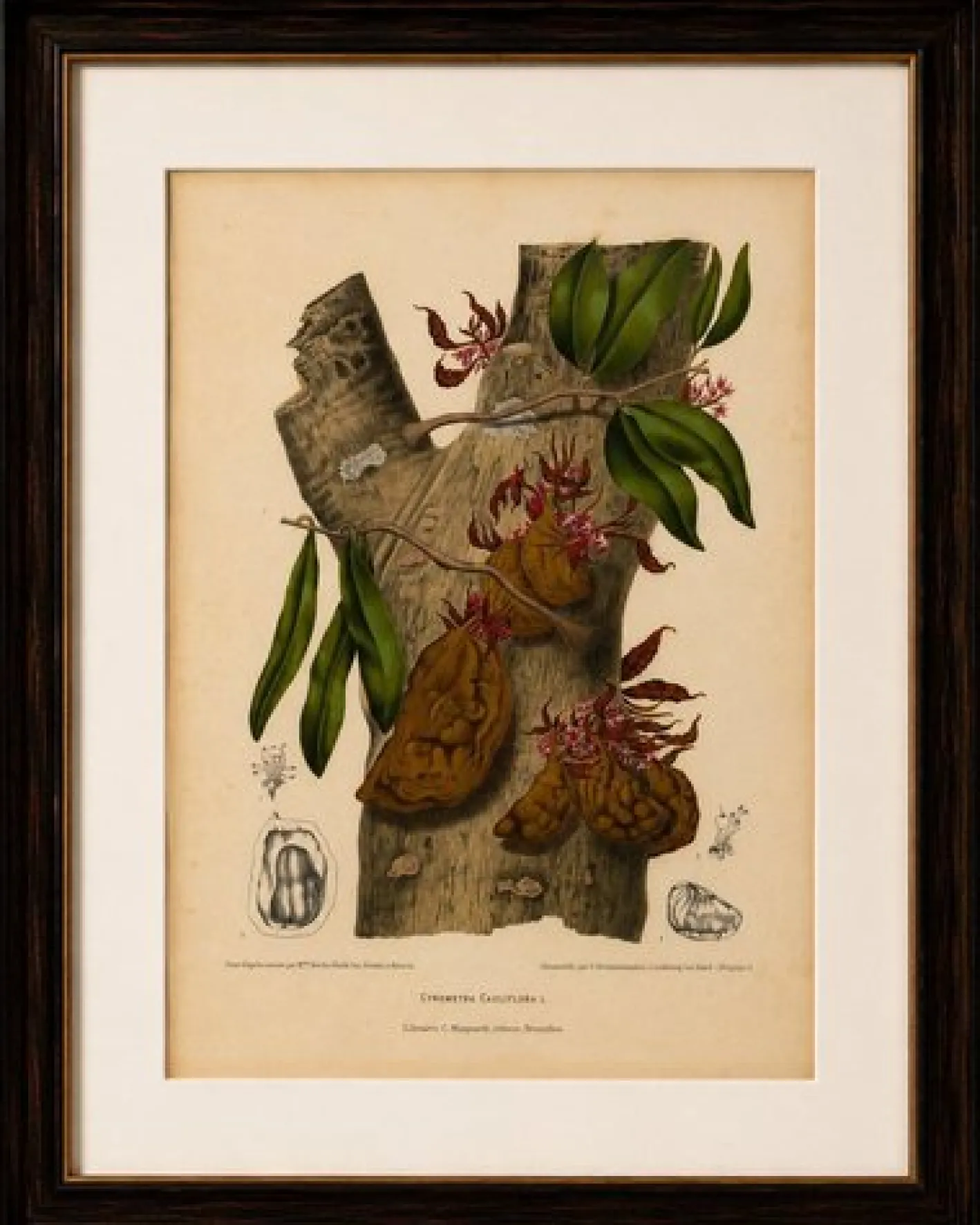
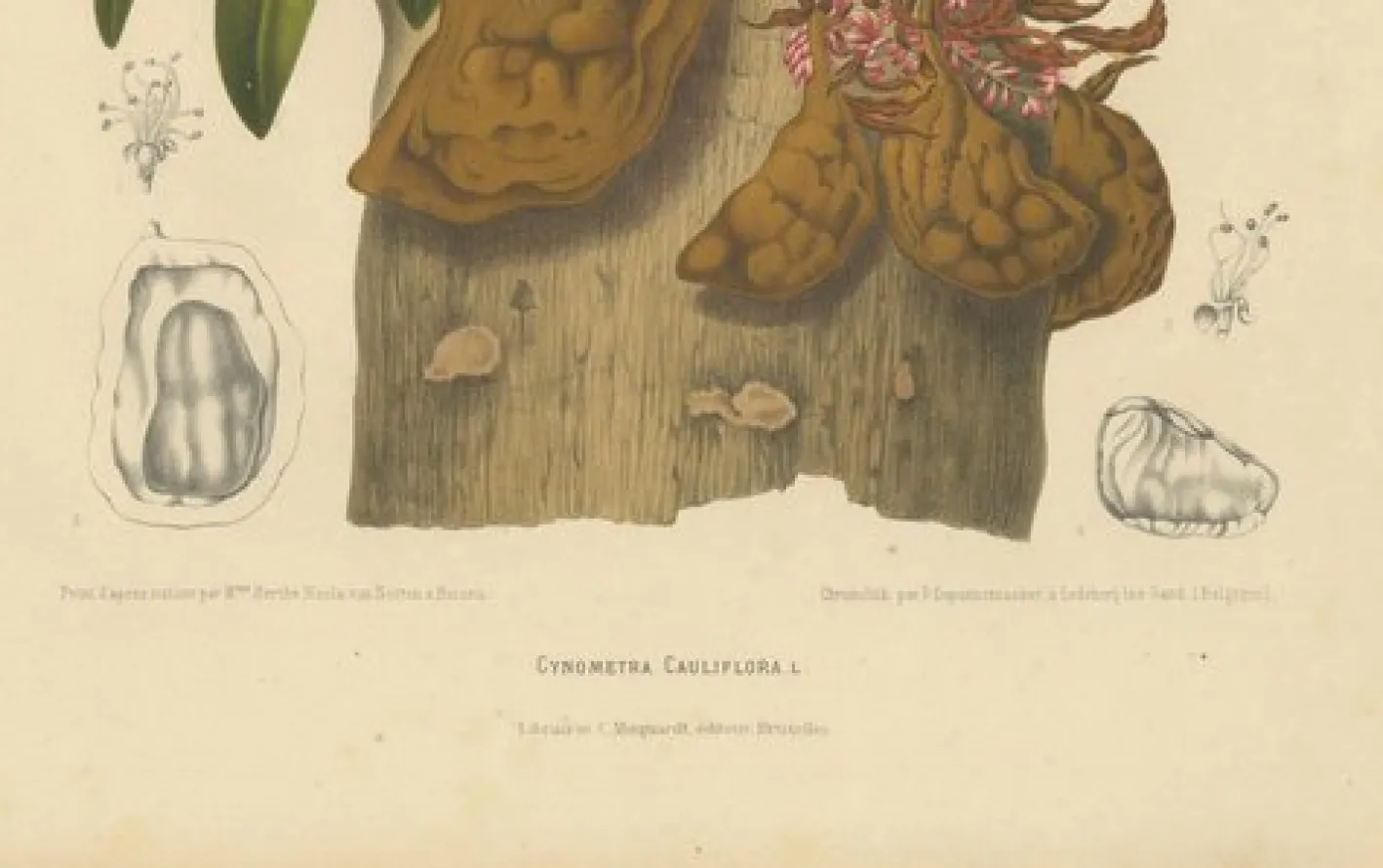
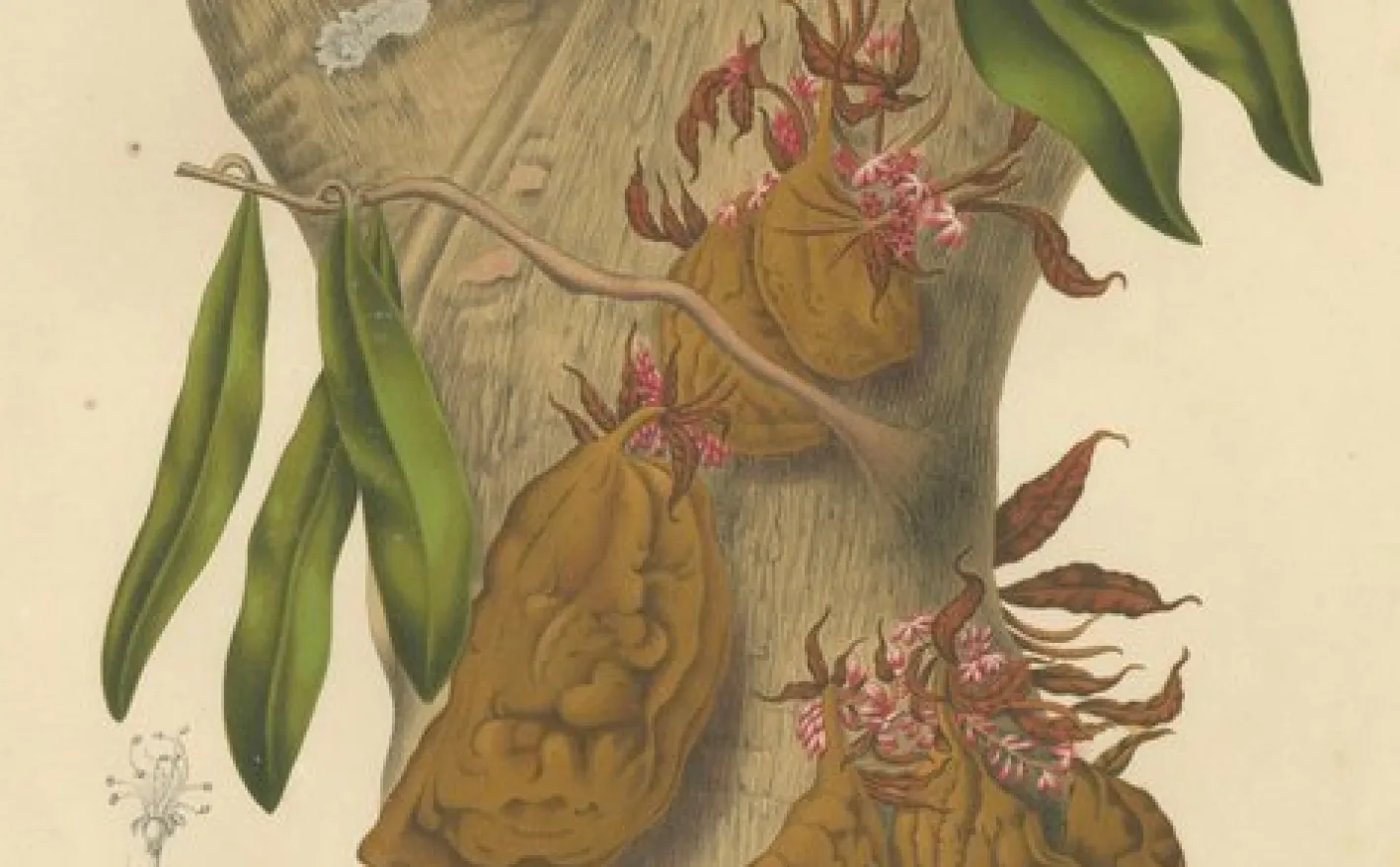
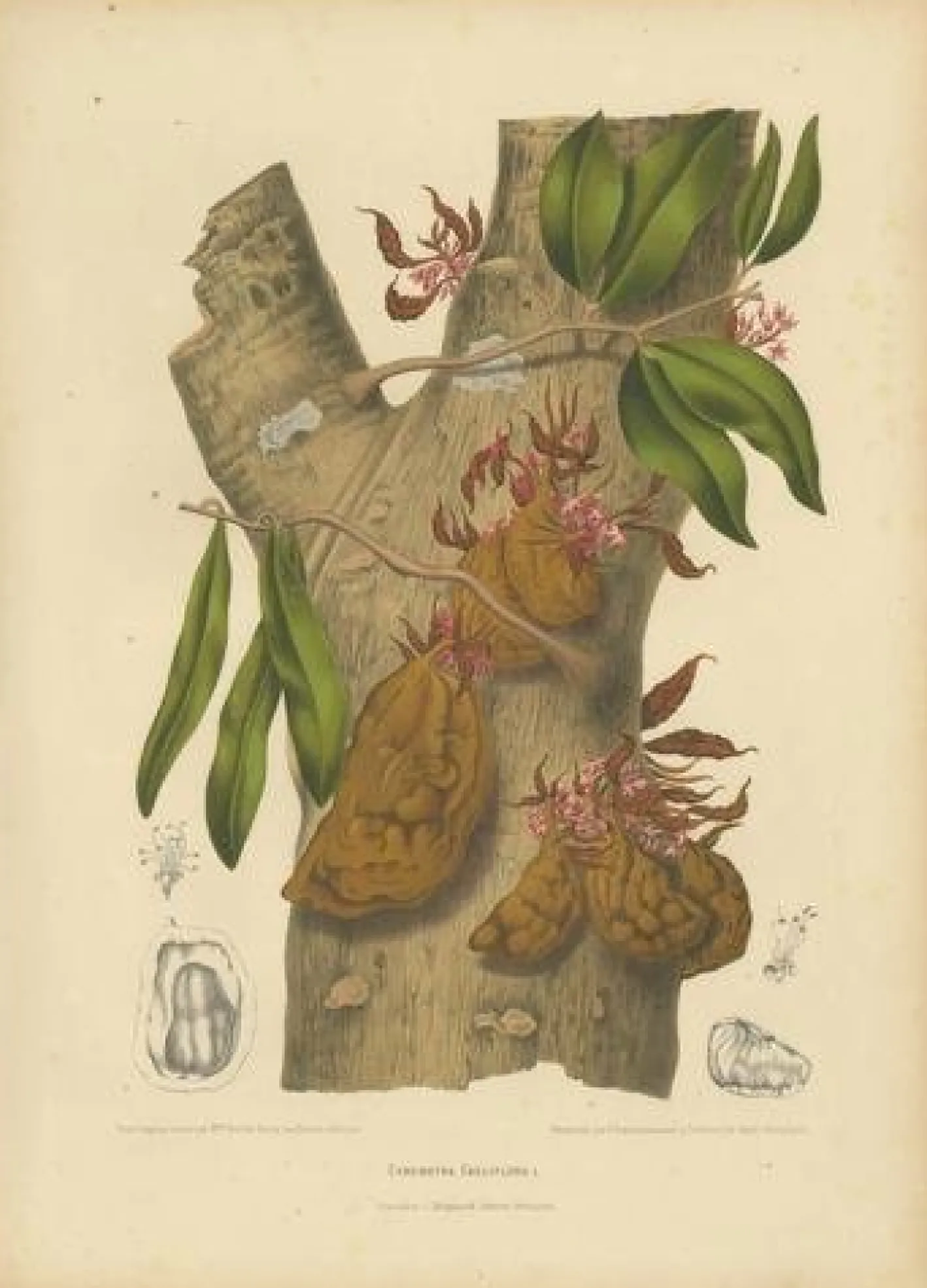
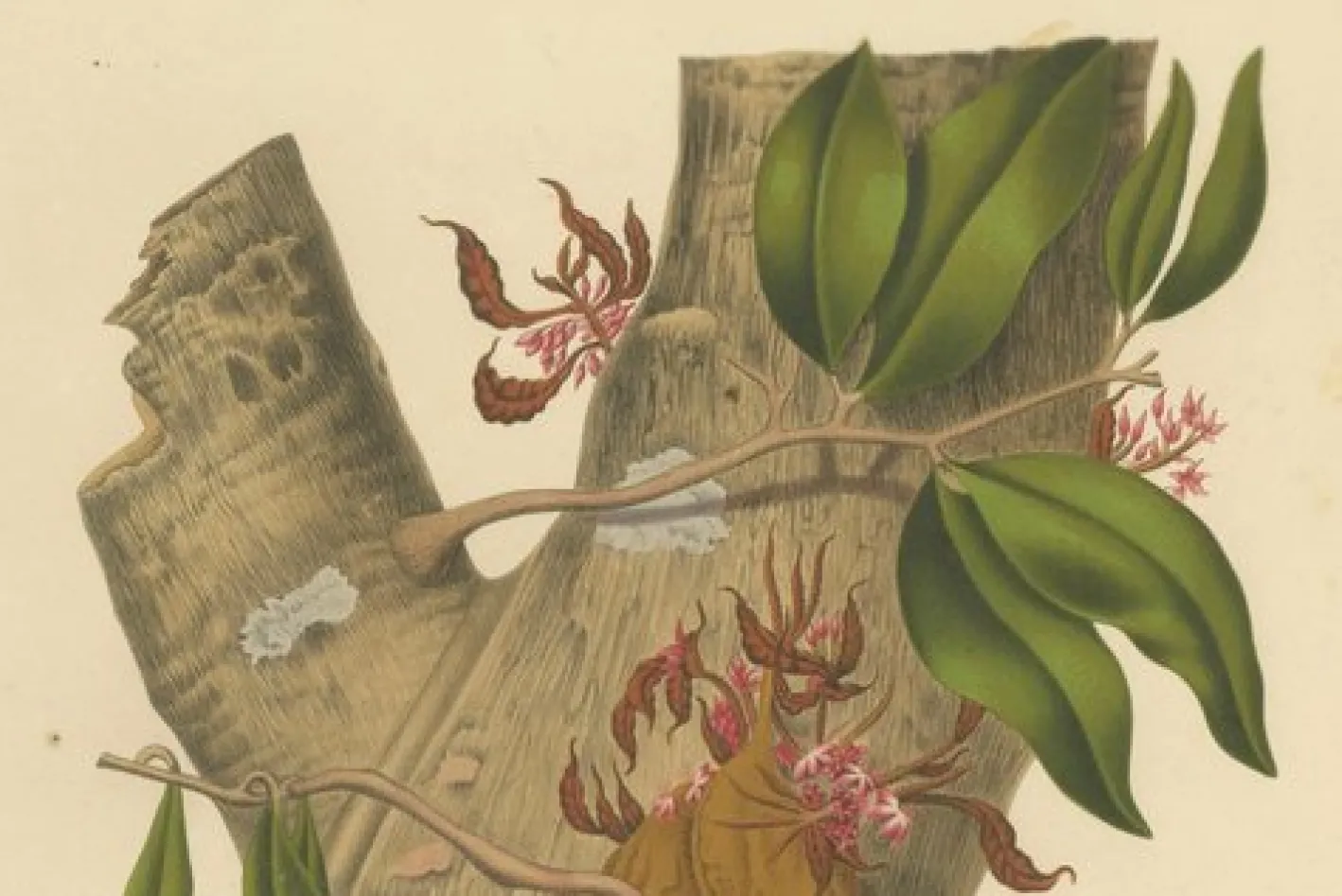
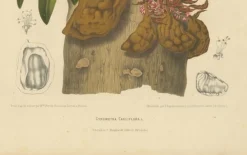
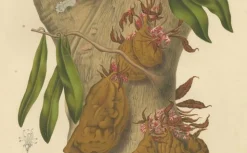
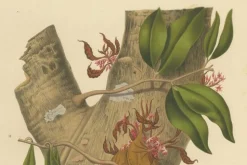
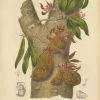
Original Antique Botanical Chromolithograph of Namnam Tree, c. 1880 A fascinating original antique botanical chromolithograph depicting Cynometra cauliflora L., commonly known as the Namnam Tree or Cat’s Face Fruit. One of the most unusual tropical fruit trees of Southeast Asia, the species is celebrated for its remarkable cauliflorous habit, producing flowers and distinctive kidney-shaped fruits directly from the trunk and older branches rather than from the tips of the stems. Native to Indonesia, Malaysia and neighboring tropical regions, the Namnam Tree has long been cultivated both as an ornamental curiosity and for its edible fruits, whose pleasantly tart flesh is enjoyed fresh or used in preserves and traditional cuisine. The extraordinary growth habit makes it one of the most visually distinctive trees in the tropical world. The composition beautifully illustrates the rough-barked trunk bearing mature fruits together with delicate pink blossoms and botanical studies of the flower, fruit and seed. The unusual arrangement of the fruiting trunk, combined with the refined botanical details, makes this one of the most intriguing and scientifically important plates from Berthe Hoola van Nooten’s celebrated publication. The artwork was painted from life on the island of Java by the distinguished Dutch botanical artist Berthe Hoola van Nooten (1817–1892). It was published in her masterpiece, Fleurs, Fruits et Feuillages Choisis de l’Ile de Java, widely regarded as one of the finest nineteenth-century botanical publications devoted to the flora of the Dutch East Indies. Printed in vibrant chromolithography by P. De Pannemaeker of Ghent, this plate was issued in the third edition published in Brussels by Librairie Européenne C. Muquardt around 1880. Today, the Namnam Tree remains one of the botanical highlights of Southeast Asia because of its highly unusual trunk-borne fruit. This original antique print combines scientific importance with outstanding decorative appeal and is a superb example of Victorian botanical art. This is an original antique print, printed circa 1880, and not a modern reproduction or later copy. Artist: Berthe Hoola van Nooten (1817–1892) Publication: Fleurs, Fruits et Feuillages Choisis de l’Ile de Java Publisher: Librairie Européenne C. Muquardt, Brussels Printer: P. De Pannemaeker, Ghent Date: Circa 1880 Medium: Original chromolithograph on wove paper. Condition: Good antique condition with age-related toning, occasional foxing and light handling wear consistent with age. Please examine all photographs carefully, as they form part of the . Please note that any framed images are for display inspiration only. The print is sold unframed. Framed mock-ups are not always shown to exact scale and are intended solely to illustrate how the artwork may look when displayed. Keywords original antique print, original chromolithograph, botanical print, Cynometra cauliflora, Namnam Tree, Cat’s Face Fruit, cauliflory, trunk fruit, tropical fruit tree, exotic fruit, Southeast Asian flora, Indonesian botanical art, Java, Dutch East Indies, Berthe Hoola van Nooten, Victorian botanical illustration, nineteenth century botanical print, antique botanical wall art, natural history print, scientific illustration, P. De Pannemaeker, Muquardt Brussels, museum quality botanical art, rare botanical print, collectible botanical print, circa 1880 The Namnam Tree is a particularly interesting botanical subject because of its rare cauliflorous growth habit. While it is less familiar than Cacao or Mangosteen, its unusual appearance makes it highly appealing to collectors of exotic tropical botany, justifying a premium mid-tier price.
Antike botanische Original-Chromolithografie des Namnam-Baums, um 1880 Eine faszinierende antike botanische Original-Chromolithografie, die Cynometra cauliflora L. darstellt, allgemein bekannt als Namnam-Baum oder „Katzengesichtsfrucht“. Als einer der ungewöhnlichsten tropischen Obstbäume Südostasiens ist diese Art für ihren bemerkenswerten stammblühenden Wuchs bekannt: Blüten und charakteristische nierenförmige Früchte wachsen direkt am Stamm und an älteren Ästen statt an den Spitzen der Triebe. Der Namnam-Baum, der in Indonesien, Malaysia und benachbarten tropischen Regionen heimisch ist, wird seit langem sowohl als kurioser Zierbaum als auch wegen seiner essbaren Früchte kultiviert, deren angenehm säuerliches Fruchtfleisch frisch genossen oder für Konfitüren und in der traditionellen Küche verwendet wird. Seine außergewöhnliche Wuchsform macht ihn zu einem der optisch markantesten Bäume der tropischen Welt. Die Komposition zeigt auf wunderschöne Weise den rauen Stamm mit reifen Früchten, zarten rosa Blüten sowie botanische Darstellungen von Blüte, Frucht und Samen. Die ungewöhnliche Anordnung des fruchttragenden Stammes in Verbindung mit den raffinierten botanischen Details macht diese Tafel zu einer der faszinierendsten und wissenschaftlich bedeutendsten aus Berthe Hoola van Nootens gefeierter Publikation. Das Kunstwerk wurde von der angesehenen niederländischen Botanikkünstlerin Berthe Hoola van Nooten (1817–1892) nach der Natur auf der Insel Java gemalt. Es erschien in ihrem Meisterwerk „Fleurs, Fruits et Feuillages Choisis de l’Ile de Java“, das weithin als eine der besten botanischen Publikationen des 19. Jahrhunderts gilt, die der Flora von Niederländisch-Indien gewidmet ist. Diese Tafel wurde in lebendiger Chromolithografie von P. De Pannemaeker aus Gent gedruckt und erschien in der dritten Auflage, die um 1880 in Brüssel von der „Librairie Européenne C. Muquardt“ herausgegeben wurde. Auch heute noch gilt der Namnam-Baum aufgrund seiner höchst ungewöhnlichen, am Stamm wachsenden Früchte als eines der botanischen Highlights Südostasiens. Dieser originale antike Druck vereint wissenschaftliche Bedeutung mit herausragendem dekorativem Reiz und ist ein hervorragendes Beispiel für viktorianische botanische Kunst. Es handelt sich um einen originalen antiken Druck aus der Zeit um 1880 und nicht um eine moderne Reproduktion oder spätere Kopie. Künstlerin: Berthe Hoola van Nooten (1817–1892) Veröffentlichung: Fleurs, Fruits et Feuillages Choisis de l’Ile de Java Verlag: Librairie Européenne C. Muquardt, Brüssel Drucker: P. De Pannemaeker, Gent Datum: Um 1880 Medium: Original-Chromolithografie auf Büttenpapier. Zustand: Guter antiker Zustand mit altersbedingter Verfärbung, vereinzelten Stockflecken und leichten Gebrauchsspuren, die dem Alter entsprechen. Bitte prüfen Sie alle Fotos sorgfältig, da sie Teil der Produktbeschreibung sind. Bitte beachten Sie, dass gerahmte Abbildungen lediglich als Inspiration für die Präsentation dienen. Der Druck wird ungerahmt verkauft. Gerahmte Darstellungen sind nicht immer maßstabsgetreu und dienen ausschließlich dazu, zu veranschaulichen, wie das Kunstwerk bei der Präsentation aussehen könnte. Stichworte: Original-Antikdruck, Original-Chromolithografie, botanischer Druck, Cynometra cauliflora, Namnam-Baum, Katzenkopf-Frucht, Stammfrucht, tropischer Obstbaum, exotische Frucht, südostasiatische Flora, indonesische botanische Kunst, Java, Niederländisch-Indien, Berthe Hoola van Nooten, viktorianische botanische Illustration, botanischer Druck aus dem 19. Jahrhundert, antike botanische Wandkunst, naturhistorischer Druck, wissenschaftliche Illustration, P. De Pannemaeker, Muquardt Brüssel, botanische Kunst in Museumsqualität, seltener botanischer Druck, sammelwürdiger botanischer Druck, um 1880 Der Namnam-Baum ist aufgrund seiner seltenen stammblühenden Wuchsform ein besonders interessantes botanisches Motiv. Obwohl er weniger bekannt ist als Kakao oder Mangostan, macht ihn sein ungewöhnliches Aussehen für Sammler exotischer tropischer Botanik äußerst attraktiv, was einen Preis im mittleren Preissegment rechtfertigt.
Klicken Sie hier für die vollständige BeschreibungSchließen
| Produktionszeitraum | Vor 1890 |
|---|---|
| Hergestellt in | Belgien |
| Stil | Realismus |
| Zustand | Sehr gut — Dieser Vintage/antike Artikel hat keine Mängel, kann jedoch leichte Gebrauchsspuren aufweisen. |
| Artikelnummer | YFW-2599180 |
| Details über Schäden und Restaurierungen |
Guter antiker Zustand mit altersbedingter Verfärbung, vereinzelten Stockflecken und leichten Gebrauchsspuren, die dem Alter entsprechen. Bitte sehen Sie sich alle Fotos sorgfältig an, da sie Teil der Beschreibung sind.
Good antique condition with age-related toning, occasional foxing and light handling wear consistent with age. Please examine all photographs carefully, as they form part of the description.
Automatisch generierte Übersetzung |
| Material | Papier |
| Farbe | Gold, Rosa |
| Breite | 40 cm 40 cm |
| Tiefe | 1 cm 1 cm |
| Höhe | 56 cm 55.5 cm |
Be the first to review “Berthe Hoola van Nooten, Namnam Tree, 1880, Chromolithograph”
Related products
Color Pop

Arbeiten Auf Papier
Druckgraphiken Und Multiples
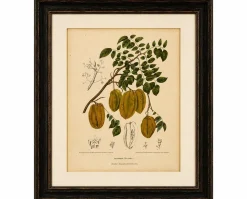
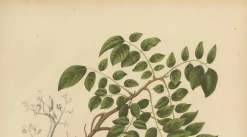
Schaf van Nooten, Sternfrucht Botanik, 1880, Chromolithograph

Druckgraphiken Und Multiples
Salvador Dalí, And She Place Him in a Monument, 1964, Lithographie

Gemälde

Druckgraphiken Und Multiples
Reviews
There are no reviews yet.